


Eden Walks Blog
Things to do in Rome
Things to do in Rome
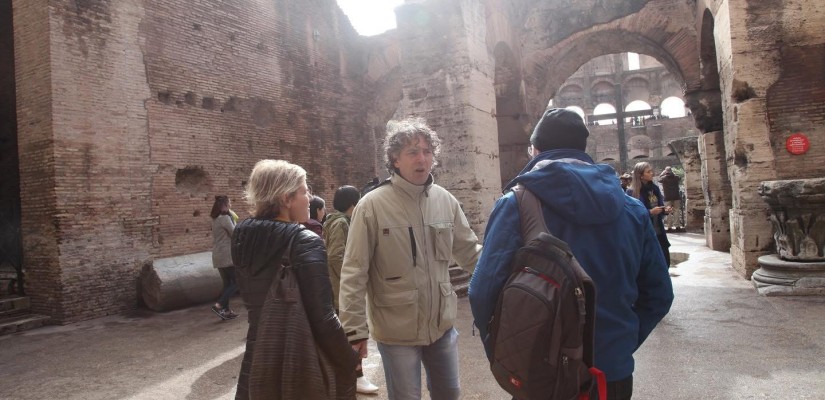
Blood, Gods, and Spectacle: Inside the World of the Gladiators
Gladiators did not enter the arena alone.
They believed they were watched by Nemesīs, the goddess of vengeance and divine balance. She punished arrogance and rewarded courage. Before combat, gladiators prayed not for survival, but for a worthy fate.
Rome understood spectacle like no other civilization.
To celebrate his victory over Dacia, Emperor Trajan organized the most extravagant games in Roman history: 123 consecutive days of spectacles in the Colosseum. During these celebrations, over 11,000 animals were killed and 10,000 gladiators fought. It was slaughter on an imperial scale.
What the Arena Looked Like
The Colosseum was a living machine of entertainment.
Gladiators emerged dramatically from underground tunnels connected to the Ludus Magnus, the main training school. When trapdoors opened, they appeared suddenly in the arena — a shock effect not unlike a modern pop star rising on stage.
Musicians played throughout the fights. Dwarfs entertained the crowd between combats. Exotic animals were displayed, hunted, or executed. Female gladiators, known as gladiatrices, also fought rare, controversial, and immensely popular.
One famous duel ended with both fighters victorious: Priscus and Verus, granted freedom after an evenly matched and heroic battle.
Sometimes the arena recreated mythology. A condemned woman was forced to reenact the story of Pasiphaë, wife of King Minos. Dressed as the queen, she was placed in the arena with a bull a brutal reenactment of the myth that gave birth to the Minotaur.
Other punishments were equally horrifying. Twenty German prisoners, condemned the day before, were forced to strangle one another. Untrained slaves sometimes placed sponges in their throats, choosing suffocation over prolonged agony.
The sand itself was treated with saffron, meant to mask the stench of blood and death.
Fame, Desire, and Scandal
Gladiators were celebrities. Their sweat was collected and sold as a cosmetic. Their blood was believed to cure epilepsy. Women bought souvenirs during the games — cushions, tokens, small objects — sometimes sold by other women.
Writers like Juvenal, in his Sixth Satire, raged against noblewomen seduced by gladiators. One infamous figure, Sergius, fought with a scarred face and a wounded arm, yet women adored him. Another gladiator openly took the wife of a Roman senator.
The arena was not just violence. It was desire, fantasy, and transgression.
Death as an Art
Gladiators were not trained only to fight.
They were trained to die well.
To face death calmly, without fear, to accept the final blow with dignity — this was how a gladiator earned the applause of the crowd. Honor mattered as much as victory.
Fights could be chaotic and brutally close, like modern mixed combat. In some cases, tactics resembled battlefield warfare: constant rotation, pressure, exhaustion.
One relief shows a chilling moment: a gladiator pins another to the ground with his sword — while the man beneath him plunges a blade into his opponent’s neck.
Only one gladiator ever truly threatened Rome itself: Spartacus, a slave who rebelled and led an army that made the Republic tremble.
Rome, Then and Now
The Colosseum stands at the center of twelve centuries of Roman history — from monarchy, to republic, to empire. Before it rose, there was Nero’s palace. After the Great Fire, the land was drained, reclaimed, and transformed. After civil war, the legions proclaimed Vespasian emperor, and the Flavian dynasty gave Rome its greatest monument.
Nearby, at Largo di Torre Argentina, where Julius Caesar was assassinated, cats now roam freely. Once the heart of political murder, today it is a protected cat sanctuary — a quiet echo of Rome’s endless transformations.
Rome has always mixed the sacred with the absurd. After all, even Caligula, in one of his many moments of madness, reportedly parked his chariots wherever he pleased — rules meant nothing to him.
The gladiators are gone.
The blood has dried.
But the stories remain — carved into stone, written by poets, whispered by ruins.
And the arena still speaks.
And yet, centuries later, Dante Alighieri, who deeply admired Trajan, placed him not in Hell but in Paradise, portraying him as a just and virtuous ruler. Rome was full of contradictions like this.
Not all emperors enjoyed the games. Marcus Aurelius, the philosopher-emperor, found gladiatorial combat tedious and vulgar. To him, the arena was noise, not virtue.
Copyright 2018 Eden Walks
Eden Walks is Part of Follow Me Tour
Website made by Rekuest Web Agency
 send message